Hi, I'm Daniel Menzel, an AI engineer and Cognitive Science master's student. I quantize and benchmark open models, build agentic systems, and measure the reliability of AI in critical, human-centered settings like therapy. Here are the projects I recently finished.
01 · Quantization
Silent Zero
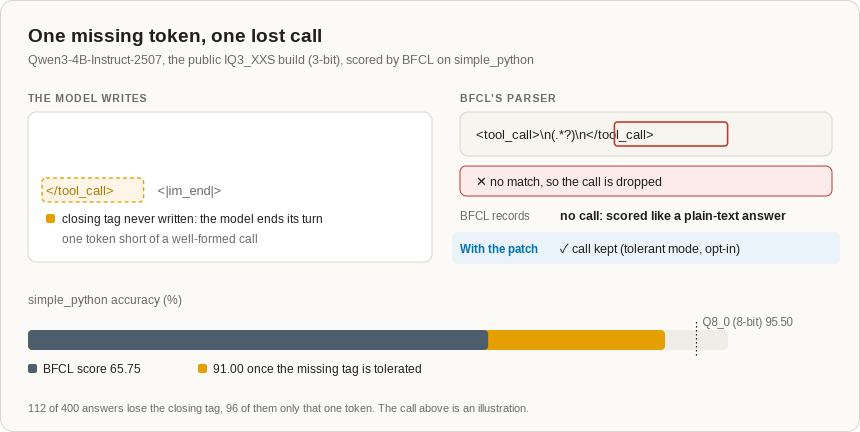
Models are rarely run below 4-bit quantization. Leaderboards like the Berkeley Function-Calling Leaderboard (BFCL) show them breaking there, but not why. In my tests, a 3-bit quantized model drops one token before </tool_call>, and BFCL scores the call as silence. This project audits the parser, patches it, and measures how much of the score comes back.
My role: I traced the bug both in self-quantized and other models, wrote the patch and reran the benchmark. In plain terms, the model lost 25 points to a parsing bug instead of wrong answers.
BFCL · quantization · tool calls
On simple_python the IQ3_XXS build scores 65.75, and 91.00 once the missing tag is tolerated. Q8_0 scores 95.50.
Silent Zero quantized a model whose layers each run once. In a looped model, one quantized weight is used on every pass.
02 · Quantization
Counting Passes
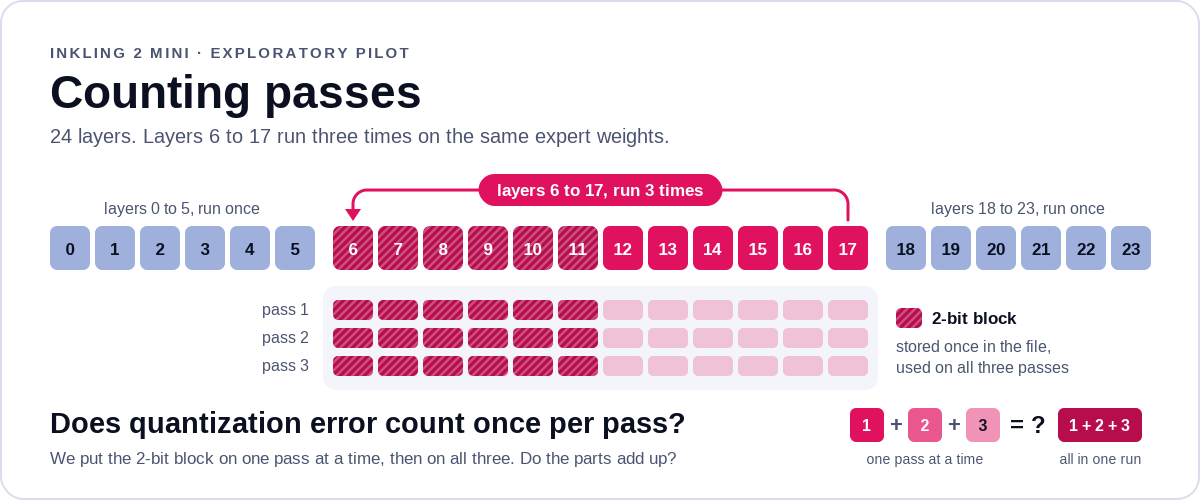
Inkling 2 Mini is a mixture-of-experts model with a loop. Layers 6 to 17 run three times on the same expert weights. Once those weights are quantized, does their rounding error count once, or once per pass? This project measures it and turns the measurements into an 11.5 GB model for Macs.
My role: I designed the study and wrote down its hypotheses and pass/fail gates before the data they govern. I ran it on llama.cpp with seven patches that let a single pass carry its own weights, built the GGUF from the measurements and published it on Hugging Face.
llama.cpp · GGUF · quantization · Metal
The per-pass test puts a 2-bit block on one pass at a time, then on all three. The single-pass changes do not add up to the all-pass change.
My file runs fully on the Mac GPU and generates about 1.75 times as fast as Unsloth's 3-bit file on stock llama.cpp right now, becuase they keep 20 expert tensors in a format stock llama.cpp can't yet multiply on Metal. In a follow-up comparison, mine came closest to the original model among Metal specific quantizations in this size.
Counting Passes measured how close a smaller file stays to its model. The next two projects measure how a model behaves.
03 · Evaluation
CRT Traps
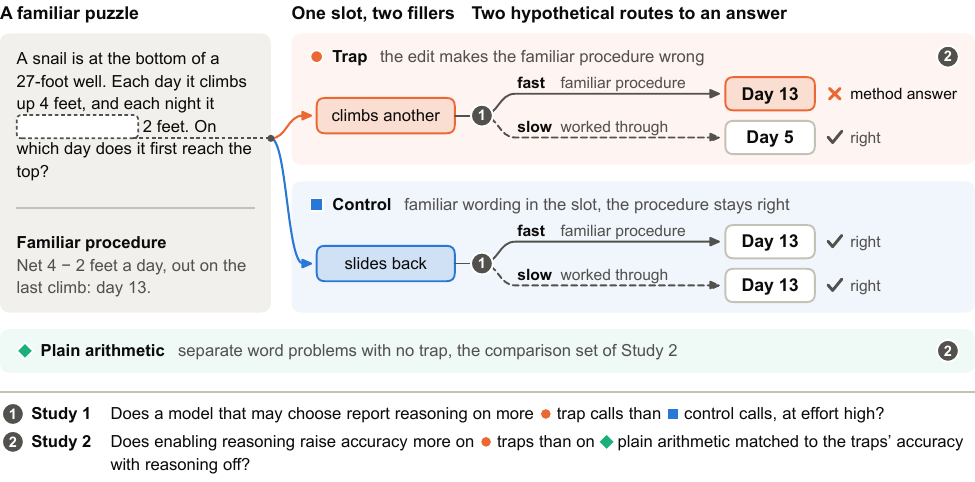
Do language models reason more when a familiar shortcut gives the wrong answer? In this side project, I took puzzles from the Cognitive Reflection Test (CRT), like the bat and the ball, and changed one phrase so the textbook method fails. Each trap has a control that changes the same phrase and keeps the method valid.
My role: I designed both studies, generated the 96 items with their answer keys, ran 8,512 model calls and wrote the report. One command rebuilds every number from the logs.
In plain terms, models that choose when to reason did so on 11 percentage points more traps than controls, but one puzzle family carried most of that. Turning reasoning on helped on traps, but no more than on plain arithmetic of the same difficulty.
benchmark design · reasoning models · OpenRouter
One snail puzzle as trap and control. The familiar method gives day 13 for both, which is right only for the control.
The drift study asks whether a model repeats its own decision when nothing about the input changes.
04 · Evaluation
Measuring Drift in Therapeutic AI
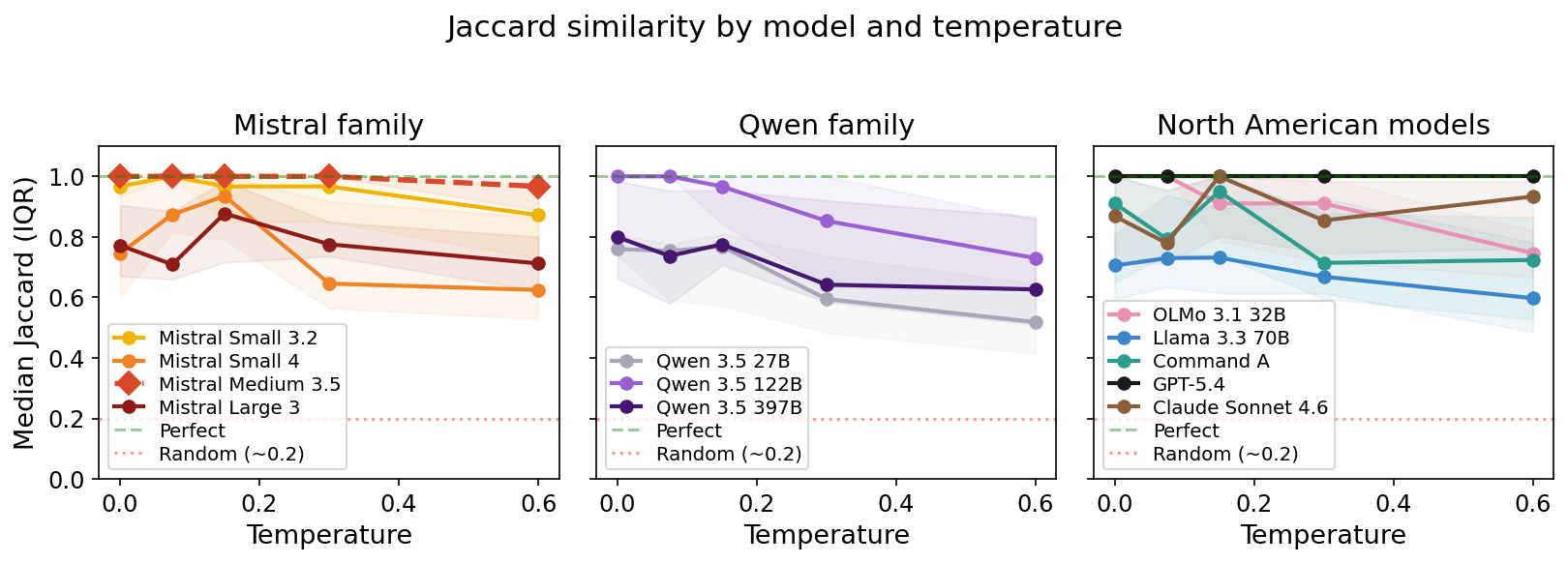
My bachelor thesis, extended, and turned into a paper. Each model gets the identical frozen therapy dialogue again and again, and I compare the plans it comes back with.
The pipeline. Dialogues are generated once, so every trial sees the same input.Jaccard similarity of repeated decisions, by model and temperature. Higher means the model repeats itself.
Mistral Medium 3.5, a dense EU-sovereign model, was the most stable, ahead of Mistral's larger MoE model Large 3, GPT-5.4 and Sonnet 4.6.
How stable a decision is depends on the model, not on the patient.
The drift study tested the same open models reDreamAI runs in production.
05 · Where it started
reDreamAI
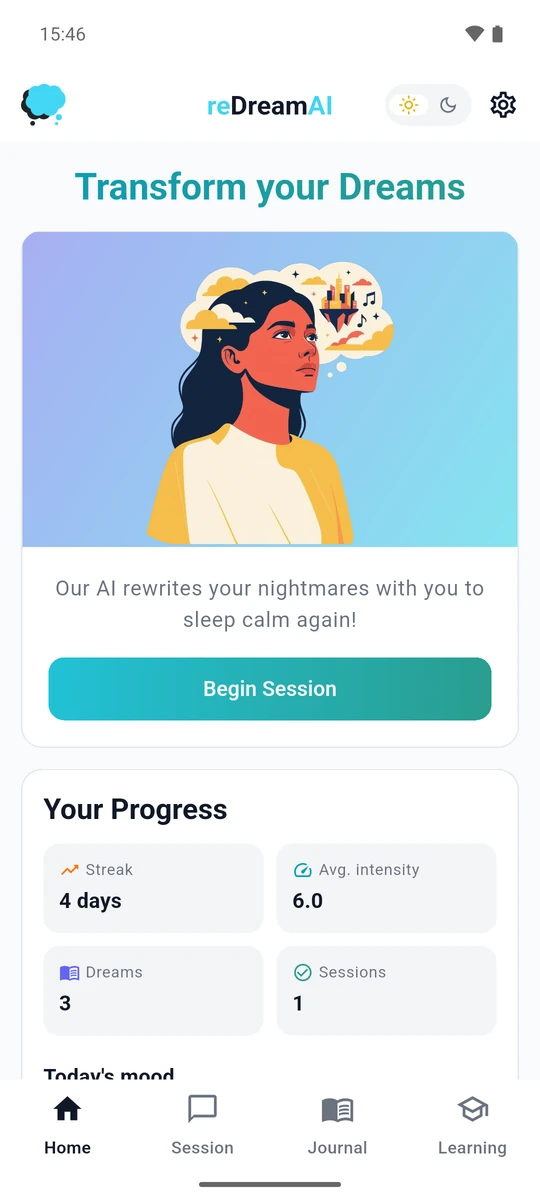
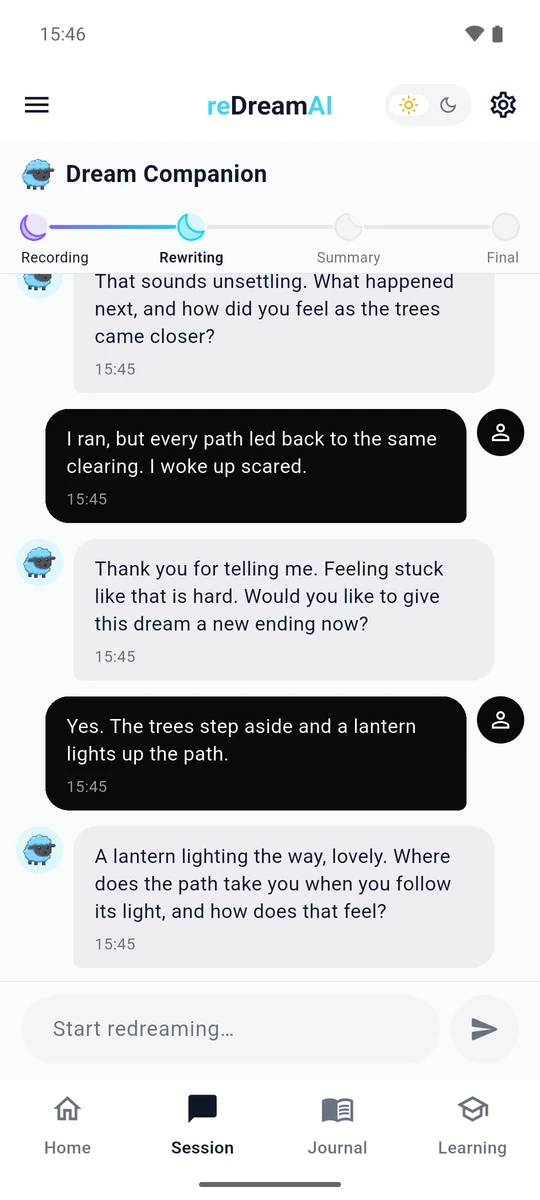
A self-help companion app against nightmares. You record a dream, rewrite it, and rehearse the new version in a meditative setting every day, with an AI guide alongside.
My role: Together with Dr. Katharina Lüth, I co-founded reDreamAI as an EXIST-funded startup project. In that phase I designed and built the app, including the experiments on safely integrating therapeutic concepts, and gained further entrepreneurial experience. Since then I've moved on to the questions in the projects above.
A Python workbench for authorized red teaming. Open-weight and GPT models propose passive checks and review the observations. The workbench links findings to captured evidence.
The prototype detected planted issues in a local lab and supported a passive review of a public website. Work in progress.
 Me-Daniel/Inkling-2-Mini-Metal-GGUF on Hugging Face